Start with the real cost of keeping it running
The first mistake many packing teams make is judging a cutter or dispenser by the last repair bill only. A quick blade change or bearing swap may look cheaper than a new unit, but the real cost includes lost time, repeat callouts, film waste, operator frustration, and missed dispatch deadlines.
On a busy line in Germiston or Boksburg, a unit that is out for 20 minutes every few days can cost more in production loss than it does in parts. If the machine still functions but needs constant attention, write down every stoppage for a month. Include labour time, spares used, and the effect on roll change speed. That simple record usually makes the answer clearer.
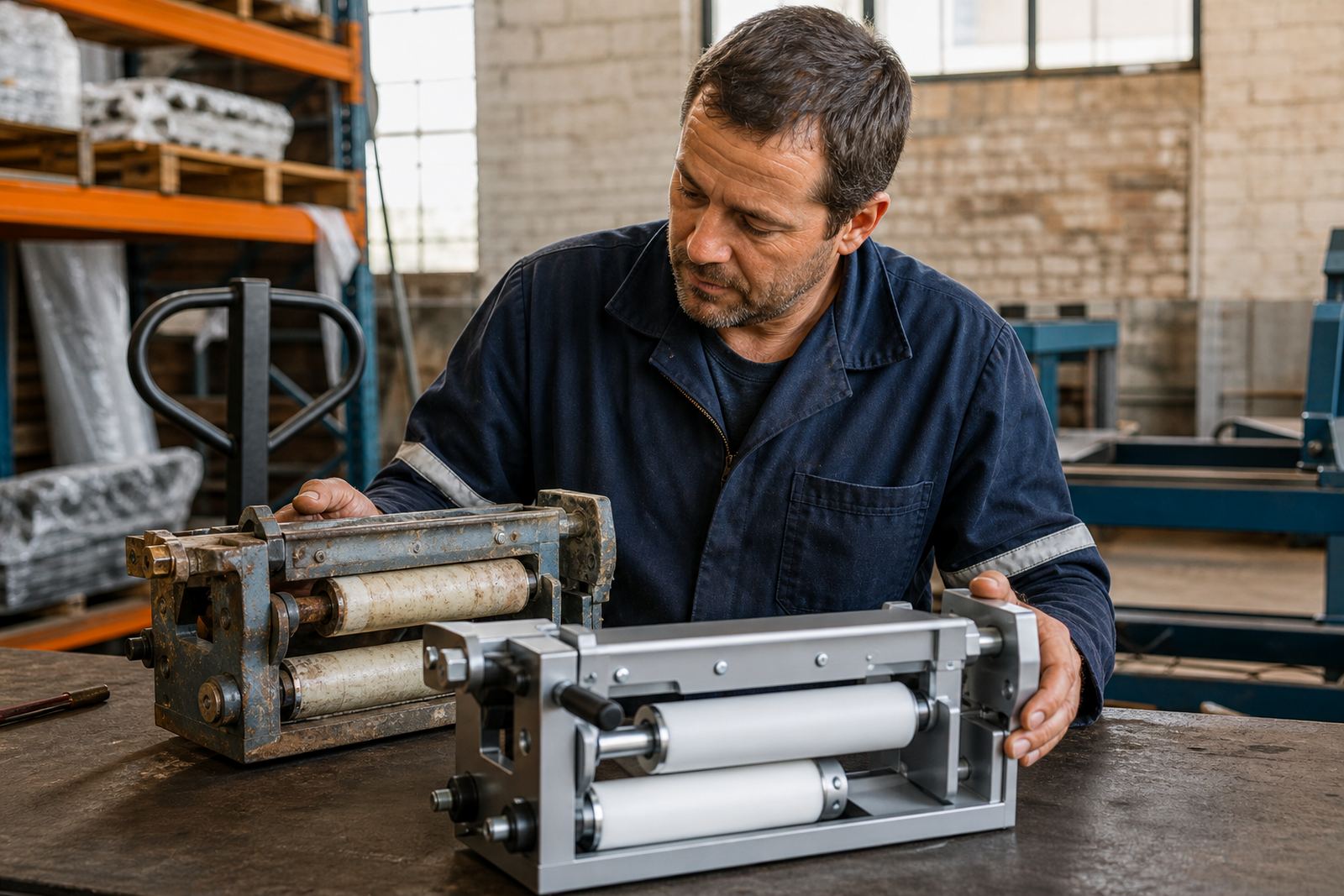
As a rule, if the equipment is older but still mechanically sound, repair can make sense. If the frame is bent, the cutting action is inconsistent, or the dispenser no longer holds film properly, you are often paying to patch up a unit that will keep giving trouble.
Signs that repair is still the better option
Repair usually wins when the problem is localised and the rest of the unit is in decent condition. A worn blade, a loose fastener, a tired spring, or a damaged guide can usually be sorted without replacing the whole assembly. The same applies when the issue is caused by poor setup, not worn components.
- The unit is under 5 years old and the body is still straight and stable.
- Only one or two parts are failing, and those parts are available.
- Operators are using it correctly but the cutting edge has simply worn down.
- Film feed is smooth once the tension or alignment is reset.
- The line does not need a higher output rate or a different roll size.
Preventive servicing is often enough to keep these units productive. In many cases, a proper service also clears the issue causing the fault in the first place, such as buildup, loose fittings, or a cutter mounted slightly off line. That small adjustment can make a big difference, and it avoids unnecessary spend.
When replacement starts making better business sense
Replacement becomes the smarter option when the unit is costing you more in downtime than in value. If repairs are becoming more frequent, or if the same fault returns after each visit, the equipment is nearing the end of useful service. You should also look closely at units that are no longer safe for operators to handle properly.
There is a point where a dispenser or cutter is simply too worn for accurate film application. If the blade seat is damaged, the dispenser body is cracked, or the roll support has play that cannot be corrected, replacement is usually the better choice. In those cases, the packing team ends up compensating all day for a unit that is no longer holding its setting.
- Repair costs over 6 to 12 months are climbing close to the price of a new unit.
- Spare parts are becoming harder to source or take too long to arrive.
- The line is moving faster and the old unit cannot keep up.
- Operators are lifting, twisting, or forcing the unit to make it work.
- Safety checks keep flagging the same issue after each service.
Match the unit to the job, not just the budget
One of the biggest reasons replacements pay off is better fit for the application. A cutter or dispenser that worked well on a slow packaging bay in the past may be too light for a higher-volume line today. The same applies when film type changes, such as moving from a lighter stretch wrap to heavier loads or a different shrink film format.
Before deciding, check what the line actually needs now. Consider roll weight, diameter, handling frequency, and whether operators need a simple handheld unit or a fixed setup at the packing station. A good replacement should reduce strain, improve film control, and cut wasted motion during roll changes.
In some plants, the old unit still has a place on a backup line or for low-volume work, while a newer model takes the main load. That can be a practical compromise, especially where budgets are tight and the site wants to spread spend over time.
A local example from a Germiston packing line
A mid-sized packing operation in Germiston called us after their stretch film dispenser started slipping during afternoon shifts. The unit had been repaired twice in six months, and the team kept seeing uneven wraps and wasted film near the end of each roll. On paper, the machine was still usable, but the line was losing time every week.
After a site assessment, we found the frame was fine, but the handle assembly and tension points were worn beyond a sensible repair. We also saw that operators were forcing roll changes because the current design was awkward for their packing flow. In that case, a replacement made more sense than another round of patch-up work.
The result was quicker roll changes, less waste, and fewer complaints from operators. The line did not need more parts, it needed a better fit for the way the team worked. That is the point many businesses miss. A unit can still be running, but still be the wrong tool for the job.
Use a simple decision check before you sign off spend
If you are unsure whether to repair or replace, use a basic checklist with maintenance, production and safety input. Do not let one department decide alone, because the cheapest option on the invoice is not always the cheapest option in practice. A short review can save a lot of back-and-forth later.
- Age of the unit and condition of the main frame.
- Frequency of breakdown callouts over the past year.
- Availability and lead time of spares.
- Impact on output during load-shedding recovery or peak shifts.
- Safety risks during roll change support and operator handling.
- Whether a new unit would improve speed, control, or training.
If the same fault keeps returning, or if the unit is slowing the line down during busy dispatch periods, replacement will usually be the better commercial choice. If the problem is limited and the body is still in good shape, a proper repair and preventive servicing may give you another good run. Either way, the decision should be based on line performance, not habit.