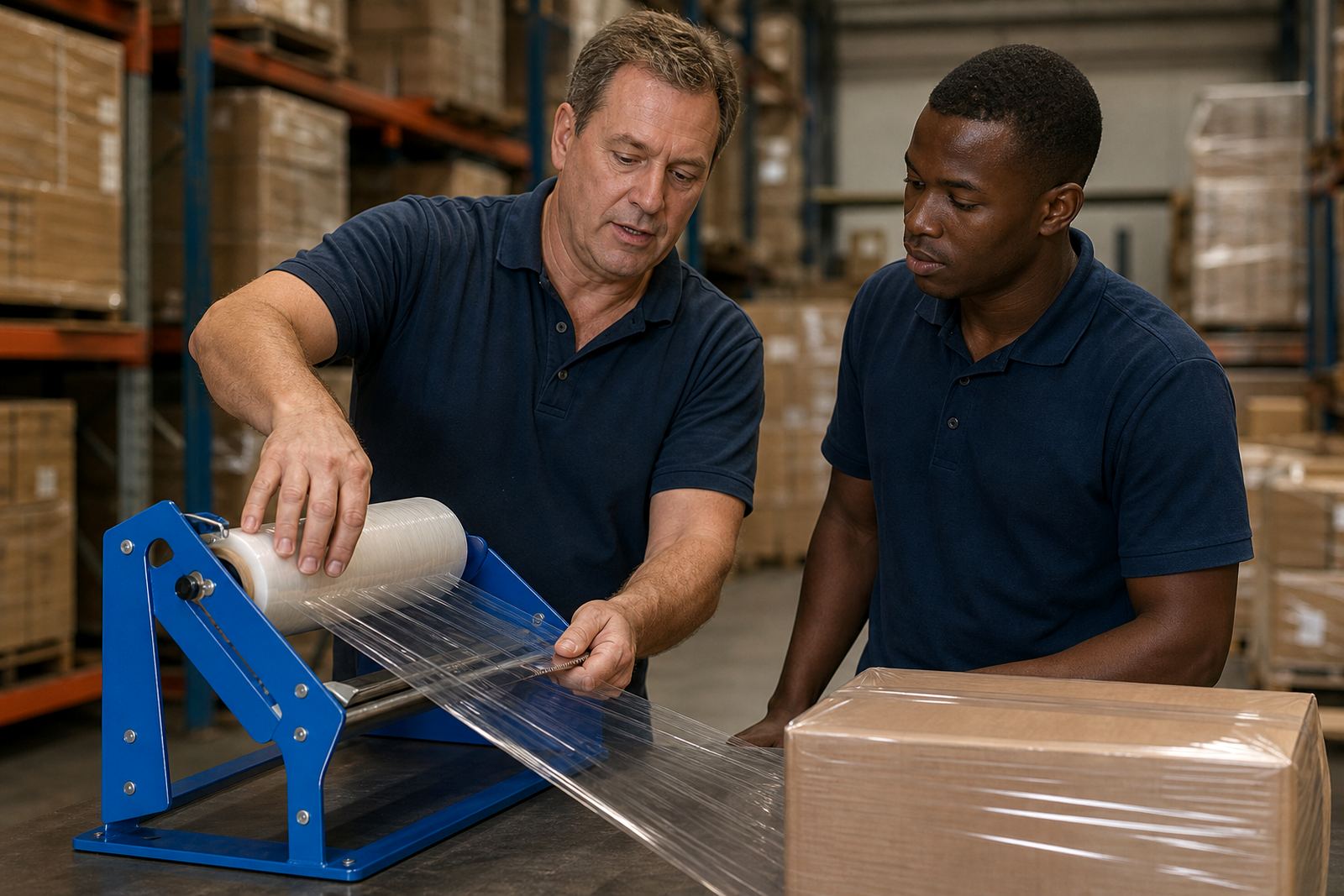
Start with the job, not the tool
Good training begins with the packing task itself. A new operator should first understand what the film is meant to do, whether it is holding cartons together on a pallet, protecting goods from dust, or keeping mixed loads stable during transport from Germiston to Durban or Cape Town. When the purpose is clear, the cutter or dispenser stops being just another item on the line and becomes part of the packing process.
That first session should cover how the line works, where the film is fed, how the roll sits, and what a clean cut should look like. It also helps to explain why poor technique creates waste, loose wraps and damaged product. A short, practical explanation usually works better than a long talk full of theory.
- Show the operator the correct film path before any hands-on use
- Explain where the roll tension must feel firm, not tight enough to drag
- Point out the signs of a bad cut, such as fraying edges or uneven wraps
- Link every step back to output, safety and waste reduction
Teach one routine and repeat it every shift
The best operators use the same sequence each time. That means checking the dispenser, confirming the blade or cutting edge is sound, loading the roll properly, and then testing the first wrap before the line builds speed. When the same routine is used in Johannesburg today and in Polokwane next month, the result is easier to measure and easier to improve.
At Film Cutters we often see trouble start when one shift develops its own habit and the next shift copies it, even if it is wrong. A standard routine removes that guesswork. Keep the steps short enough to remember and written where the team can see them near the packing line.
- Inspect the dispenser and moving parts before the shift starts
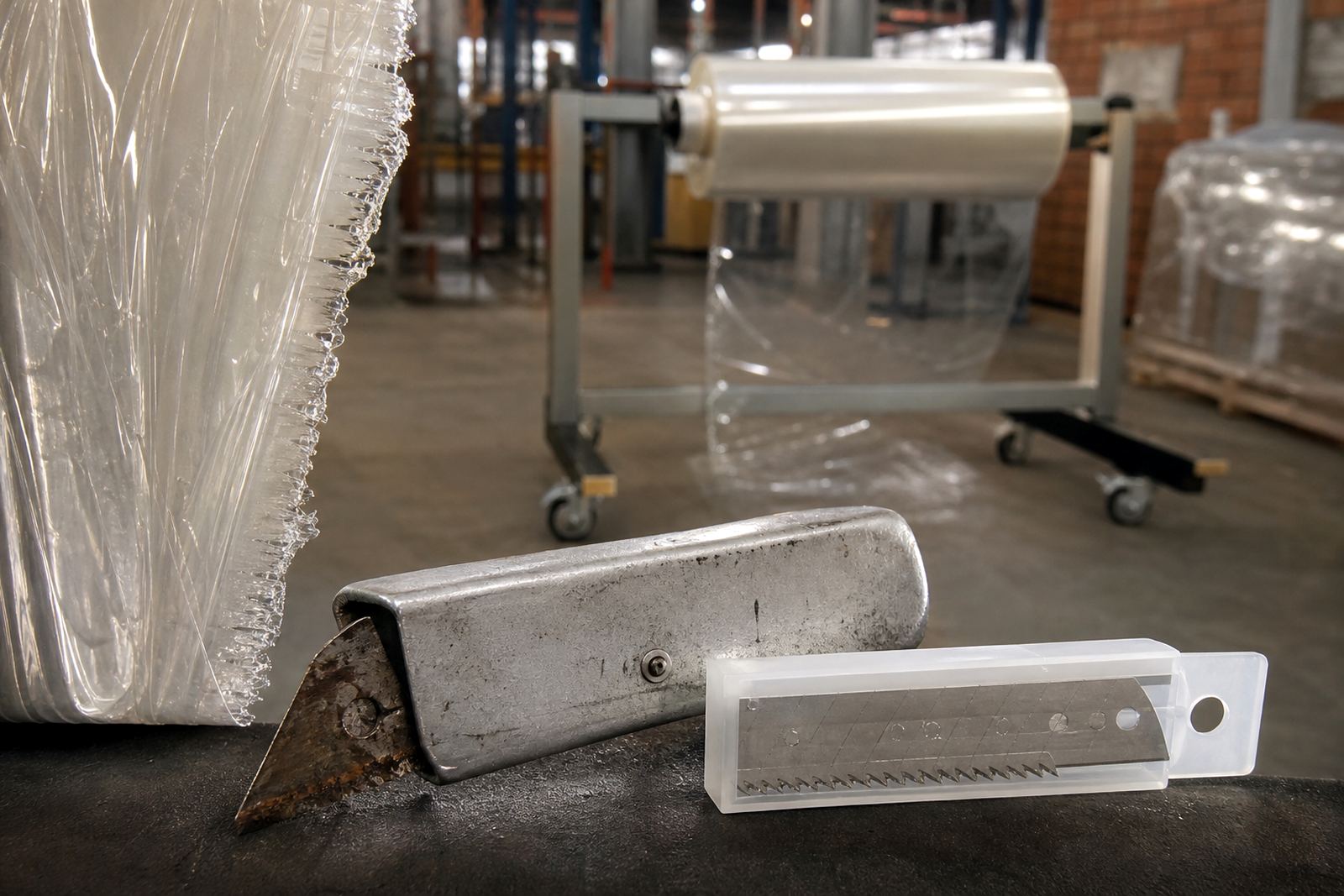
- Check the blade or cutter edge for wear, nicks or build-up
- Load the film roll square and secure it correctly
- Run one test wrap and confirm the cut is neat and repeatable
- Record any issue before moving onto full production
Use live demonstrations, then hand over the job
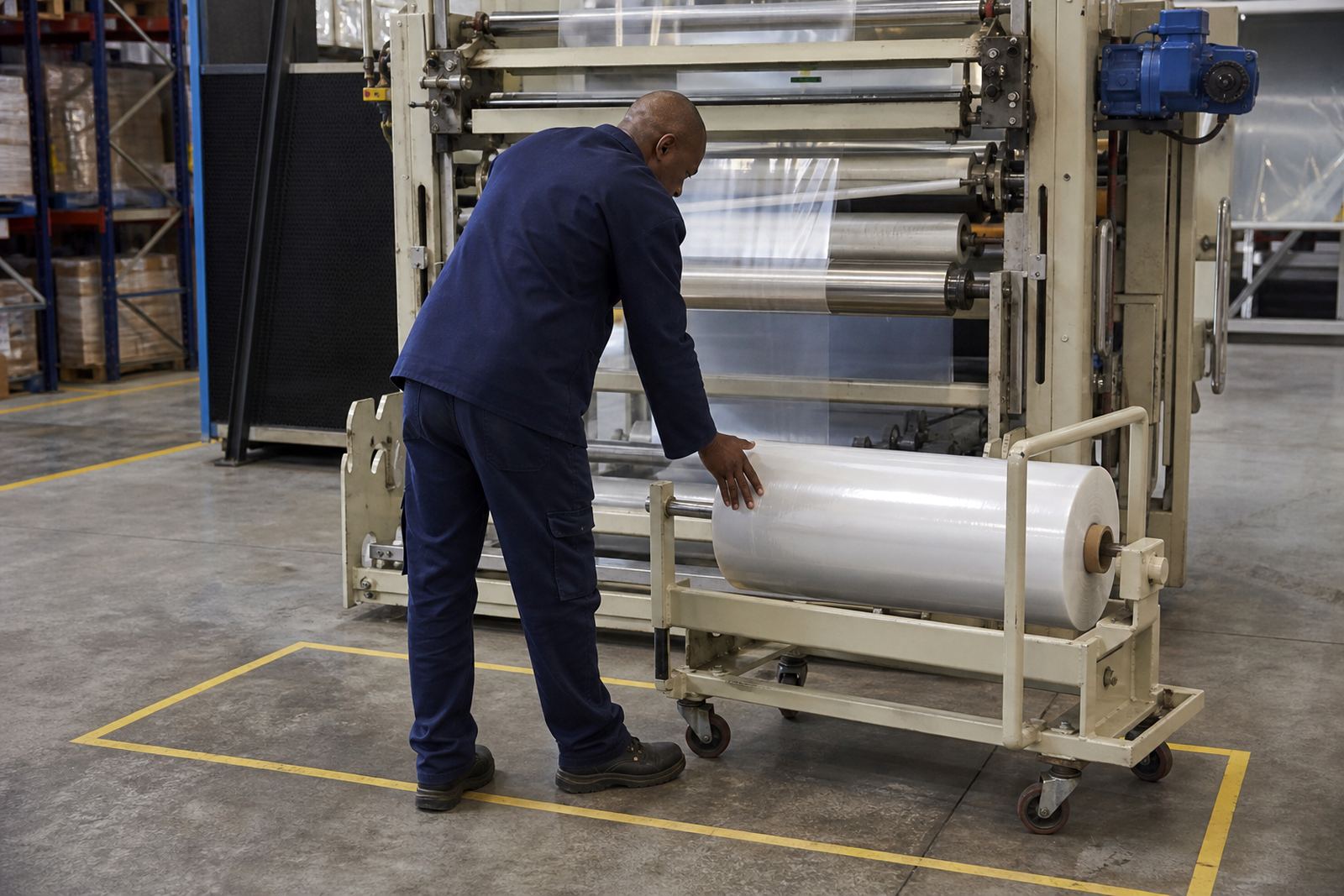
Operators learn faster when they can watch a correct action once and then do it themselves straight away. A live demonstration should cover roll changeover, film feed, cutting position, and how to keep hands clear of the blade area. After that, let the trainee repeat the task while a supervisor watches and corrects any bad movement before it becomes a habit.
This matters even more on busy sites in Boksburg or Midrand, where the line cannot stop for long. A hands-on method keeps the training practical and reduces the risk of an operator freezing when the pack line is under pressure. If the trainee can do the job slowly and correctly, speed can follow later.
- Demonstrate the full cycle from roll loading to final cut
- Ask the trainee to repeat the steps without rushing
- Correct grip, stance and hand placement early
- Check that the operator can identify when a roll is nearly finished
Build safety into every movement
Cutter and dispenser training is not only about neat packaging, it is about keeping hands, wrists and clothing out of danger. Safety checks should be part of the lesson from the first minute, not added later when someone has already had a close call. Operators must know where the cutting edge sits, how to store the tool when not in use, and what to do if the film snags during a busy run.
On sites that deal with chilled products, damp floors or coastal humidity in Durban and Cape Town, grip and footing can change through the day. That makes safe handling even more important. A clean and well-kept workstation also reduces slips, because loose film offcuts and damaged rolls can quickly become a hazard.
- Keep fingers away from the cutting edge during every cut
- Remove loose film, offcuts and scrap from the work area
- Wear the correct PPE for the site and product handled
- Stop and report damaged equipment instead of forcing it through the line
Train for the real conditions your site faces
A packing line in Germiston does not always behave the same way as one in Pretoria or Cape Town. Dust, temperature changes, uneven pallet sizes and load-shedding can all affect the way film is handled. Training should prepare operators for those conditions so they do not panic when the line slows, restarts or changes product size.
For example, a Cape Town distributor with mixed pallet loads may need operators to change rolls more often and keep tension consistent even when the line is moving in shorter bursts. In Ekurhuleni, where some plants work longer shifts, the operator may need to recognise when hand fatigue is starting to affect the cut. These are small details, but they save time and prevent waste.
- Practise roll changes under normal line speed and under reduced speed
- Show how to restart safely after a power interruption
- Cover film behaviour in warm, cold and humid conditions
- Teach operators to spot wear before it turns into downtime
Keep the training short, then back it up with checks
New operators usually remember more when training is broken into short blocks. A first session can cover the basics, then a second can focus on speed, safety and fault finding. After that, a supervisor should check performance during the first few shifts. If the operator starts making the same mistake again, a quick refresher is better than waiting for the problem to grow.
This is where simple check sheets help. They show whether the person can load film correctly, make a clean cut, report a fault and keep the workstation tidy. The goal is not to overcomplicate the process, it is to make consistent work part of the normal routine.
- Use short training blocks rather than one long session
- Assess the operator during live work, not only in a classroom
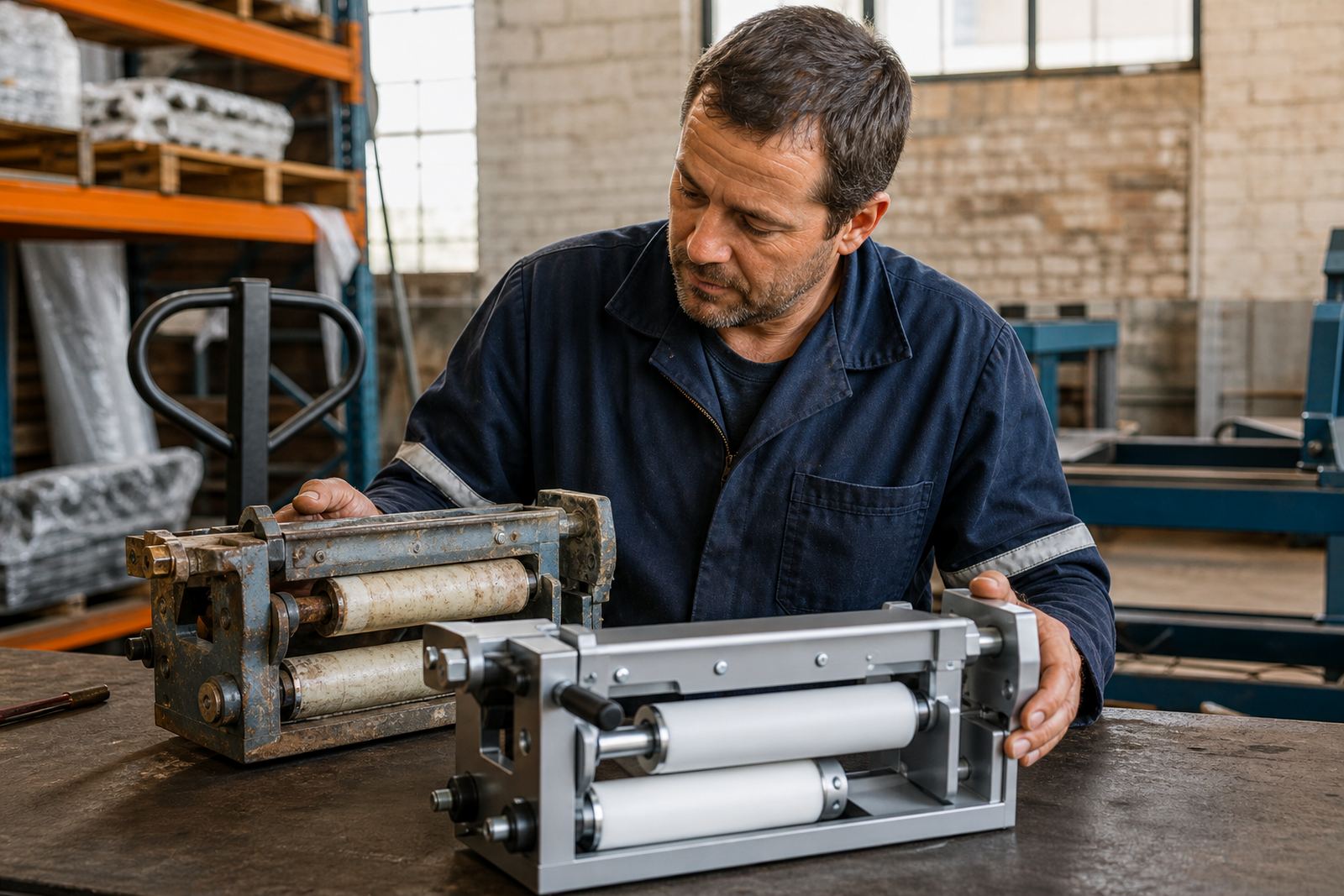
- Refresh training after blade replacement, dispenser repairs or an equipment upgrade
- Keep a simple record of who has been trained and on which line
When the team learns well, the line runs better
Training new operators properly pays off quickly. There is less film waste, fewer callouts for the same mistake, and better consistency from one shift to the next. Managers also get a clearer picture of when a problem is caused by the operator and when it is caused by the equipment itself, which saves time during fault finding.
We have seen this on a Germiston packing line serving wholesale deliveries into Johannesburg and Pretoria. After a structured handover, the team cut down on broken film edges and reduced the number of rewraps. The change was not dramatic on day one, but over a few weeks it made a real difference to output and confidence on shift.
When new operators know exactly what to do, they settle in faster and the line feels less strained. That is the point of proper training: not to add paperwork, but to make daily work steadier, safer and easier to repeat.