When bundling needs to look good and hold firm
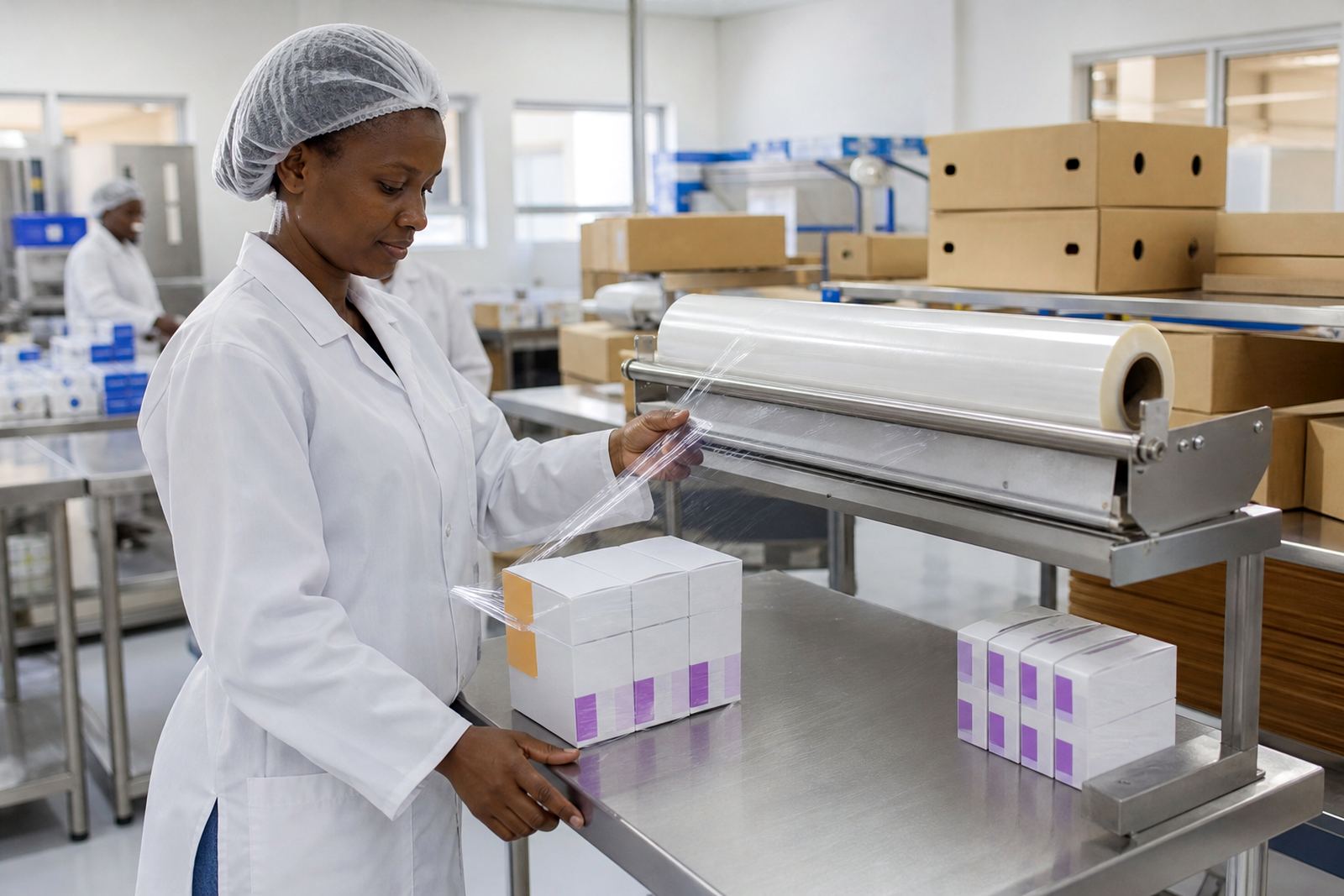
Retail bundling is usually less about heavy loads and more about presentation, speed and repeatable pack quality. Whether you are wrapping mixed multipacks, promo bundles, seasonal specials or shelf-ready cartons, the film has to sit neatly with no loose tails, ragged cuts or wasted wrap. In busy packing rooms from Germiston to Durban, small handling issues quickly become line delays.
Most retail bundling jobs use lighter gauge film than pallet work, but the pressure on the operator is still high. The cutter or dispenser must suit the pack size, the film width and how quickly products move through the line. If the pack changes often, the setup needs to be simple enough for shift teams to work with without constant adjustment.
- Multipacks for food, toiletries, hardware or household goods
- Seasonal promotions and gift bundles
- Display-ready packs for retail shelves and promotions
- Mixed product sets with different dimensions
Typical equipment set for retail bundle lines
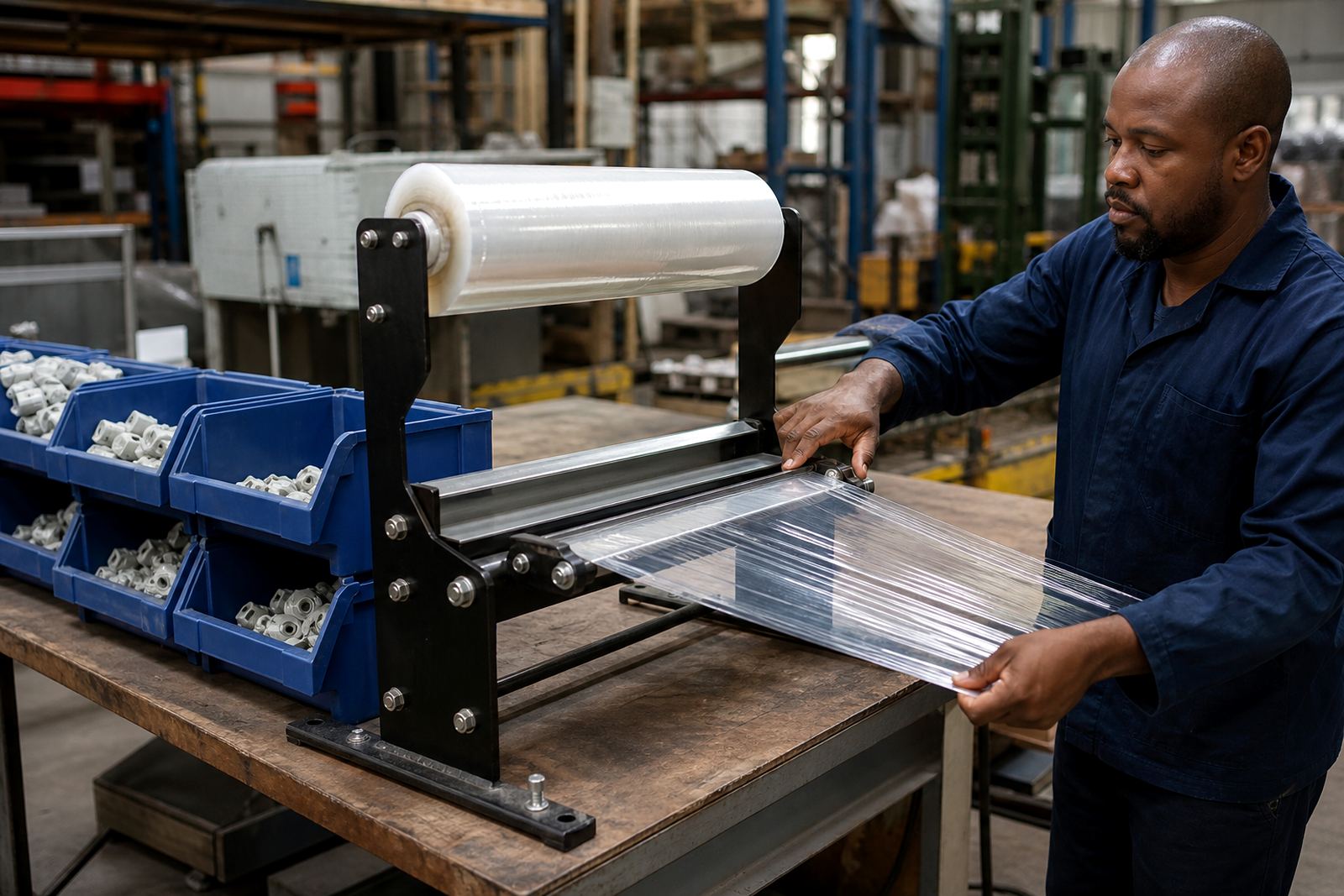
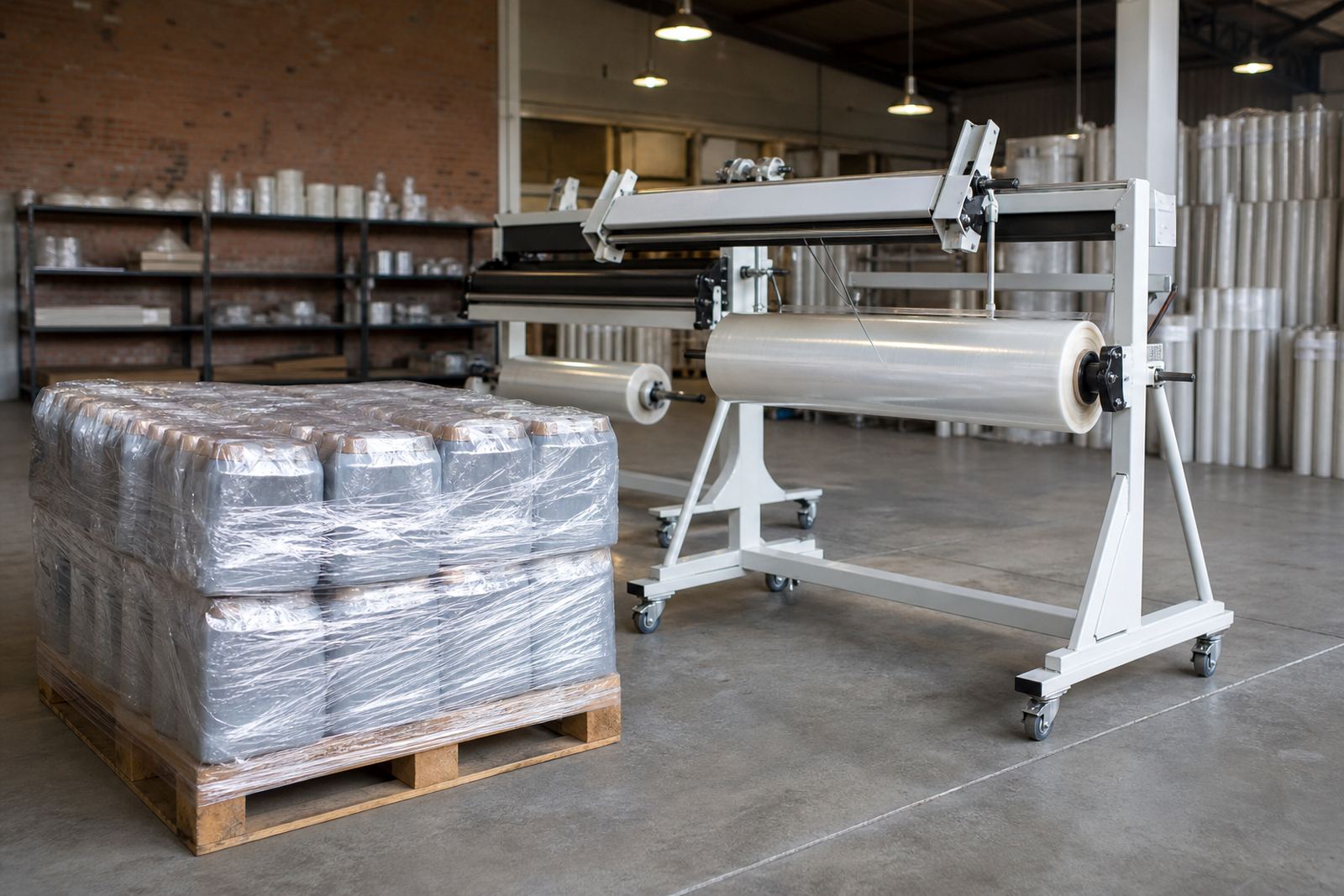
Retail bundling lines usually work best with a practical mix of cutters, dispensers and support items matched to the packing flow. A manual or semi-assisted cutter may be enough for smaller runs, while faster lines often need a dispenser that keeps the film aligned and reduces hand strain. For sites with frequent product swaps, the ability to replace blades and spares quickly matters more than most buyers first expect.
At our Germiston base, we help teams choose equipment that suits the actual bundle size, the wrap style and the level of operator skill on site. That might mean a simple station for hand-fed work, or a more controlled setup for lines where every second counts. In humid coastal areas like Cape Town and Durban, we also look at how film behaves in changing conditions, because tack and handling can shift during the day.
- Film cutters for shrink film and stretch film
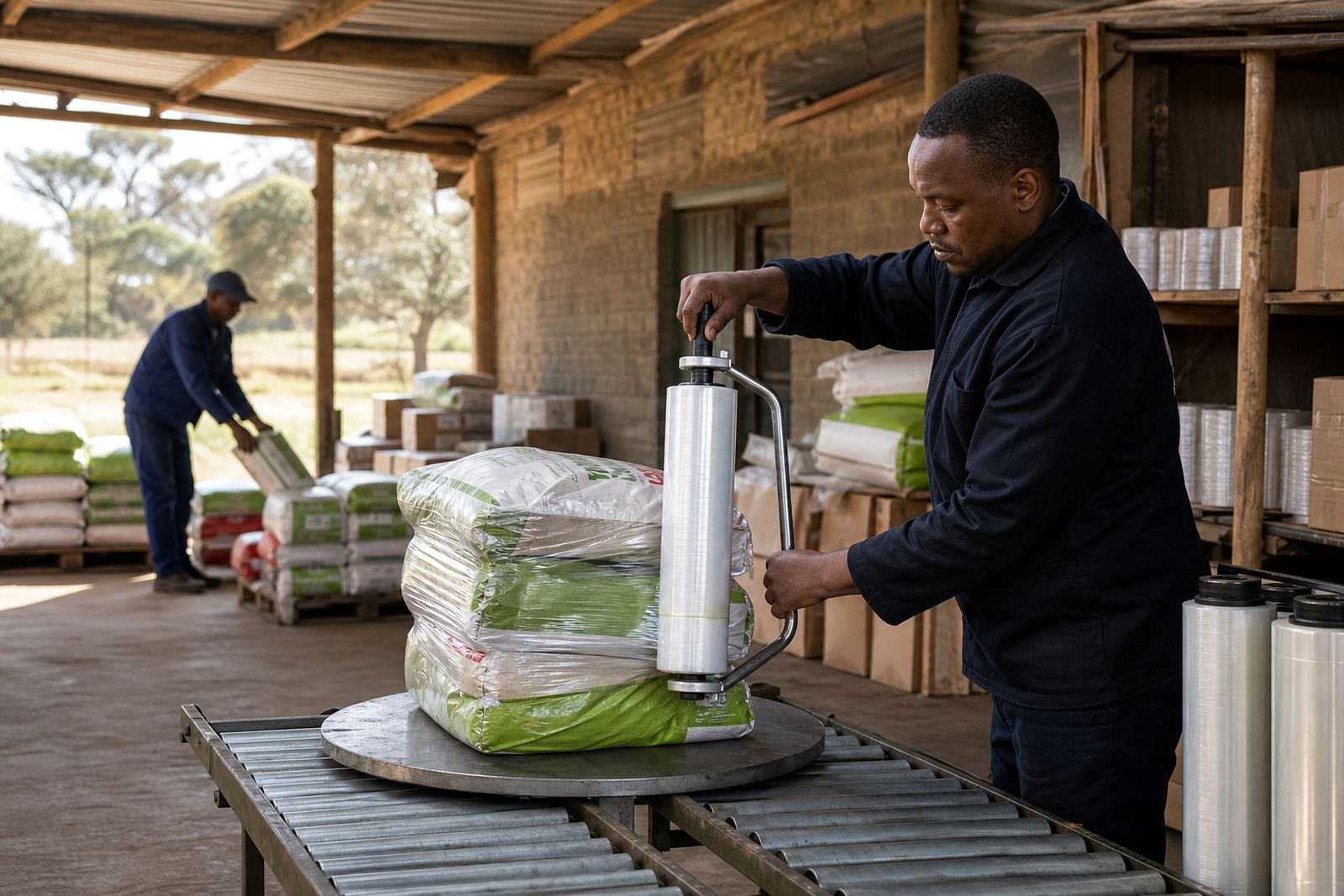
- Handheld or bench-mounted dispensers
- Replacement blades and wear parts
- Operator training for safe, repeatable use
Layout planning that keeps bundles moving
The best retail bundling stations are arranged around the operator, not just around the machine. Film rolls, finished packs, offcuts and packing tables should all be within easy reach so workers do not waste steps. If the bundle line is too long or the film roll sits awkwardly, the team will start compensating with awkward movements and you get uneven wraps or minor injuries over time.
Planning also needs to take loading, storage and maintenance into account. A site in Midrand with high throughput may need a different flow from a smaller operation in Polokwane where one team handles several pack types in a day. We often recommend a simple site assessment before installation so the dispenser, cutter and work surface are placed where they help the line instead of slowing it down.
- Keep the film roll close enough to reduce reaching
- Allow space for finished bundles and rejected packs
- Set the cutter at a height that suits the main operator
- Leave room for blade replacement and cleaning
Common mistakes on retail bundling lines
A common mistake is using one setup for every pack size. A small bundle and a wide promotional pack do not behave the same way, and the film will show it. Another issue is poor tension control, which can stretch film too tightly and distort the finished product or too loosely and leave the pack looking untidy. On retail work, appearance matters as much as hold strength.
We also see lines running with blunt blades far too long. That leads to dragging, frayed edges and operators putting in extra force, which slows production and increases the risk of cuts. In some sites the issue is simply poor training. If staff are not shown how to load the film, guide the cut and check the finish, the line ends up producing inconsistent results and more waste.
- Wrong cutter size for the pack width
- Blunt blades left in service too long
- Too much film used on each bundle
- Poor operator training on changeovers
- Ignoring humidity or static on the packing floor
Maintenance, spares and breakdown support
Retail bundling lines do not need complicated servicing, but they do need regular checks. A quick inspection of blade condition, guide parts and moving joints can prevent a stoppage during a busy dispatch window. This matters especially before month-end promotions, holiday runs and retail launches when packed stock has to leave on time.
Our team supports clients with preventive servicing, blade replacement, dispenser repairs, spares supply and breakdown callouts across Johannesburg, Pretoria, Boksburg, Germiston and surrounding areas. For sites in coastal regions such as Durban or Cape Town, we also look at corrosion and wear from moisture because those conditions can shorten the life of parts if they are left unchecked.
- Preventive servicing to reduce downtime
- Blade replacement before cut quality drops
- Repairs for dispensers and guide components
- Site checks for repeat faults and operator strain
Budget ranges for retail bundling projects
Retail bundling budgets depend on pack volume, the number of workstations and whether you need a simple hand setup or a more structured line station. For small operations, a basic cutter and dispenser package may start from about R1 500 to R4 500. Mid-range setups for busier packing rooms often sit between R5 000 and R15 000, especially where extra spares or stronger mounting is needed.
For higher volume sites, or where several packing stations need to work the same way, budgets can move from R15 000 to R40 000 or more once training, installation and upgrades are included. The point is not to buy the most expensive option, but to choose equipment that keeps bundle quality steady and does not create extra labour on every changeover.
We normally advise clients to factor in blade wear, spare parts and training from the start. That is the part many buyers forget, then the line starts costing more than planned after a few months.